
Our Story.
Born Wild began long before it became a breeding programme. It began with a Siberian Husky named Kaia.
Kaia came into my life during a time of new beginnings, as I moved to Cornwall and began my Master’s degree in Conservation. She was my first Siberian Husky, my soul dog and my shadow, and through her I fell completely in love with the breed — their intelligence, independence, adventurous spirit and unmistakably wolf-like beauty.
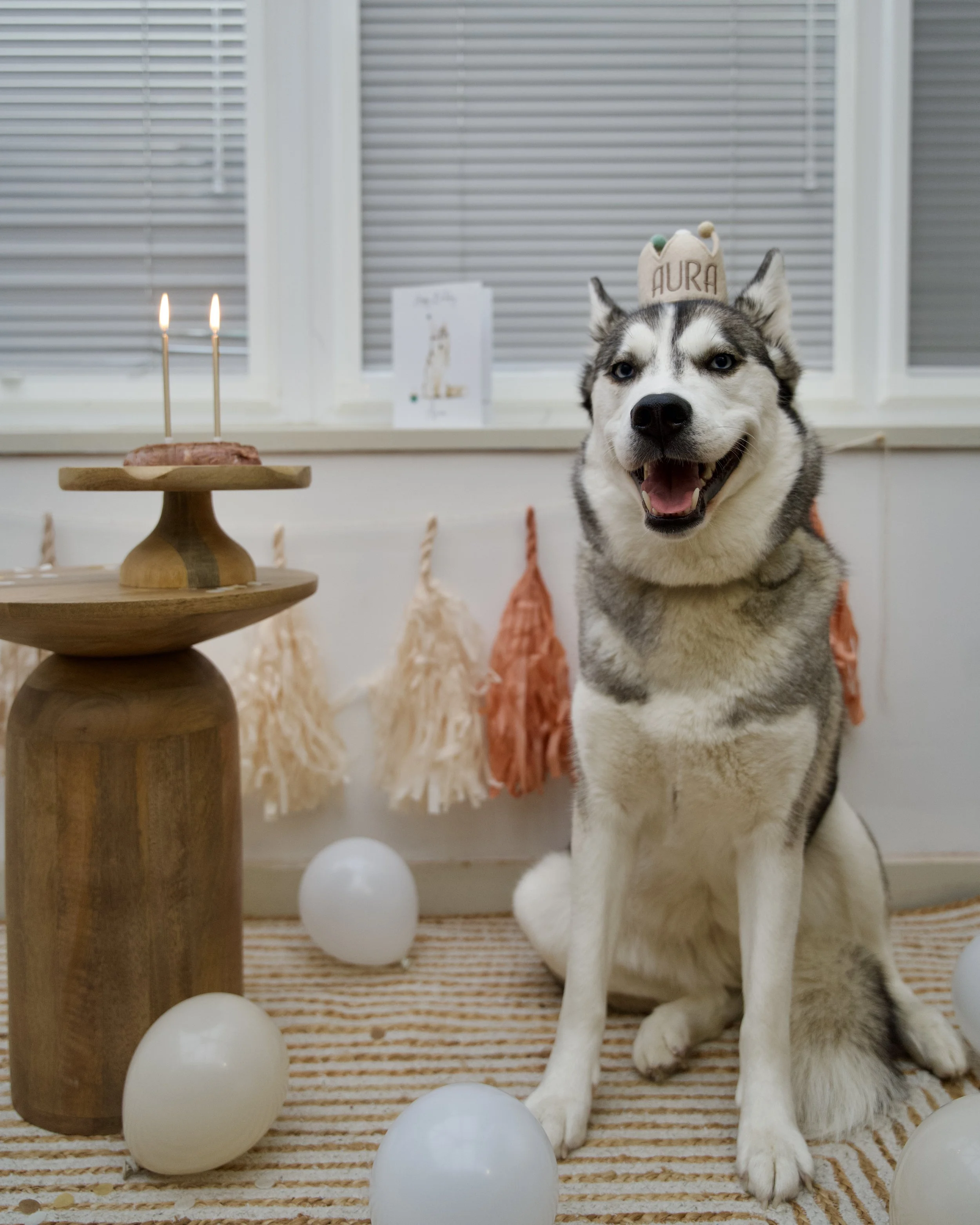
Our time together was heartbreakingly short. I lost Kaia at just 5½ months old to grand mal seizures, but the impact she had on my life never left. Months later came Aura, who helped heal my heart and showed me that a new bond could grow alongside grief without replacing what came before.
While completing a research placement in the Seychelles as part of my Conservation degree, I began thinking about adding a cat to my life. II was drawn to many of the same qualities I had always loved in Huskies. That search introduced me to the Bengal, and eventually to Mila, my first Snow Lynx Bengal, who sparked an entirely new passion and ultimately became the beginning of our Bengal journey.
From there, the tribe grew.
My fascination with wolf ancestry eventually led me to France, where I found Wilder, our low-content Wolf-Husky. Later came our Cashmere Bengals, allowing me to begin developing the long-haired Bengal lines I admired, followed by Sarabi Plains, our F3 Savannah, who marked the beginning of our journey into early-generation Savannahs.
What began with one little Husky has gradually grown into Born Wild — bringing together Siberian Huskies, Wolf-Huskies, Bengals and Savannahs under one shared philosophy.
We are inspired by the characteristics that make these animals extraordinary: their history, intelligence, athleticism, individuality and connection to their wild ancestry. But at the heart of Born Wild is something much simpler — raising animals who are deeply loved, and giving the puppies and kittens born here the foundations to become confident, engaging companions in their own families.
Kaia never got to see the tribe that followed her, but without her, none of it would exist.
She is where the Born Wild story began.
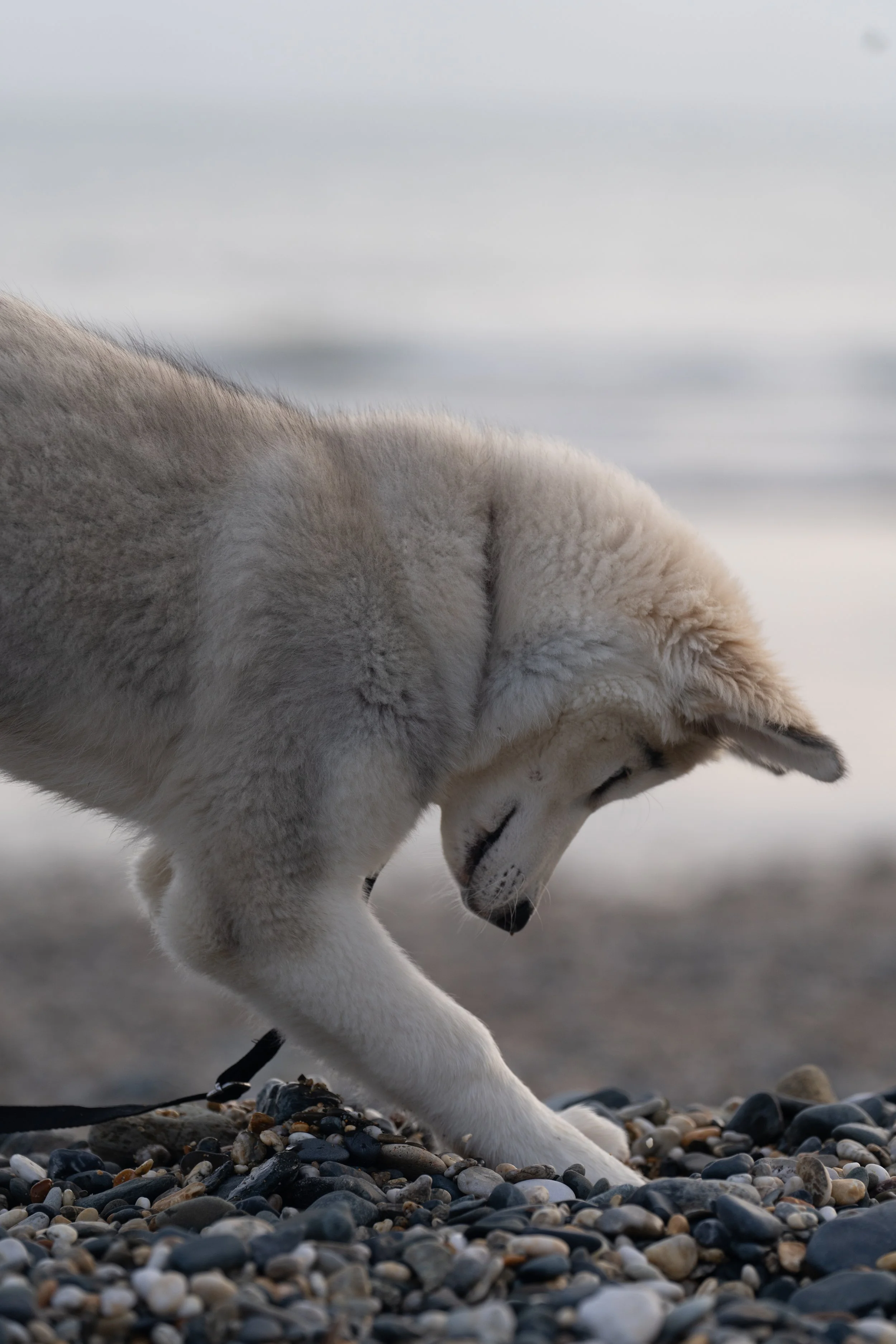
“Where the spirit of the wild, meets the heart of home”
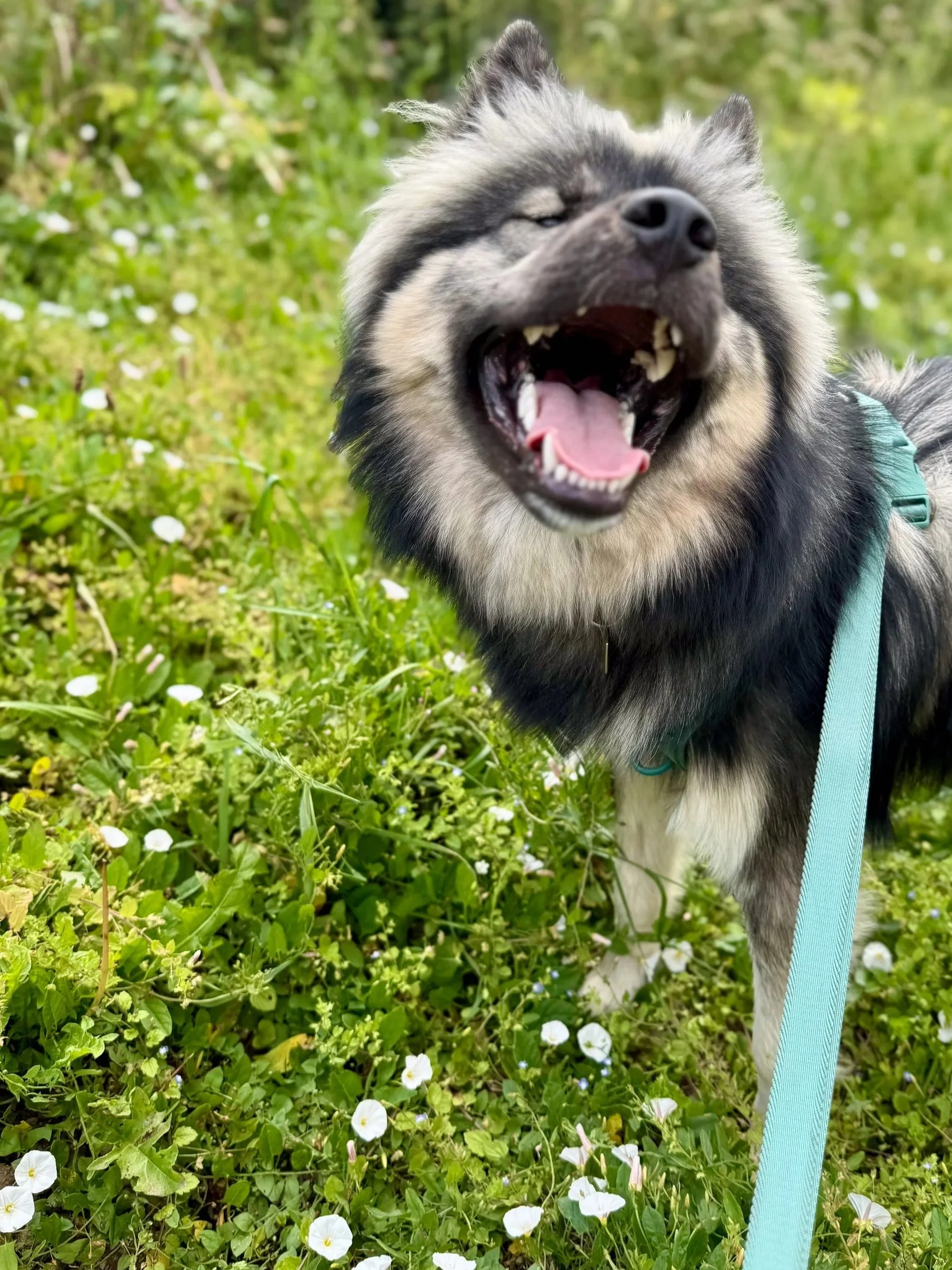
The Siberian Husky
Ancient heritage. Independent spirit. A little closer to the wild.
The Siberian Husky has a history stretching back thousands of years to the Chukchi people of north-eastern Siberia, where dogs were developed to travel across vast frozen landscapes. Their endurance, efficient movement and dense double coats made them exceptionally suited to life in an Arctic environment.
That history can still be felt in the breed today.
Siberian Huskies are athletic, intelligent, social and famously independent. They were bred to move, think and work, and tend to approach life with an adventurous curiosity of their own. Their wolf-like appearance may be what first catches someone’s attention, but it is their personality that makes living with one unlike living with almost any other dog.
They thrive with companionship, enrichment, exercise and owners who appreciate that intelligence doesn’t necessarily mean obedience. They can also be challenging. Huskies are renowned for their energy, prey drive, vocal nature and talent for finding weaknesses in supposedly secure boundaries.
It was this breed that began Born Wild with Kaia and ultimately led to our low-content Wolf-Husky programme.
A Wolf-Husky is a hybrid rather than a recognised dog breed, combining domestic dog ancestry with more recent Grey Wolf ancestry. Our focus is specifically on low-content Wolf-Huskies, where the majority of genetic ancestry remains domestic dog.
For me, their appeal begins with everything I already love about the Siberian Husky, but with another layer of ancestry and individuality. The introduction of wolf ancestry can influence appearance, structure, coat, movement and behaviour in different ways. Some individuals remain remarkably Husky-like, while others inherit more noticeably wolf-influenced characteristics, such as longer legs, larger feet, a leaner frame, heavier seasonal coats, more naturally blended colouring or a more reserved and observant nature.
That variation is part of what makes them so fascinating. Wolf content isn’t a checklist of characteristics, and two animals with a similar percentage of Grey Wolf ancestry can look and behave very differently. Low content also doesn’t simply mean a Husky that looks more like a wolf; it introduces another genetic influence that deserves to be understood and respected.
The foundation of our programme is Wilder, imported from Le Pacte des Loups in France. Embark DNA testing identifies Wilder as 86.4% Siberian Husky and 13.6% Grey Wolf. His woolly agouti coat, solid black mask and icy blue eyes give him an unmistakable presence, but he is also wonderfully goofy, playful and deeply affectionate with the people he trusts.
Wolf-Huskies can share many characteristics with purebred Huskies, while some individuals may also display greater sensitivity, caution around unfamiliar people or environments, strong social attachment, roaming or escape behaviours and high enrichment needs. Every individual is different, however, and the presence or intensity of a particular characteristic cannot be predicted simply from a DNA percentage.
For the right owner, a low-content Wolf-Husky offers something a little different while retaining the northern-breed character at its foundation — a predominantly domestic companion with a genuine genetic connection to the Grey Wolf, and all the individuality that can come with it.
Perhaps what makes these dogs most special is the relationship you build with them. A Husky or Wolf-Husky isn’t necessarily the dog who believes every stranger is their new best friend. They can be independent, selective and very much their own individual. Their affection often feels chosen rather than automatic, and earning their trust and becoming their person can create an incredibly rewarding bond.
Add in the adventure, conversation, chaos and character that comes with sharing your life with one, and it’s easy to understand why, once you’ve been chosen by a Husky, one so often becomes two.
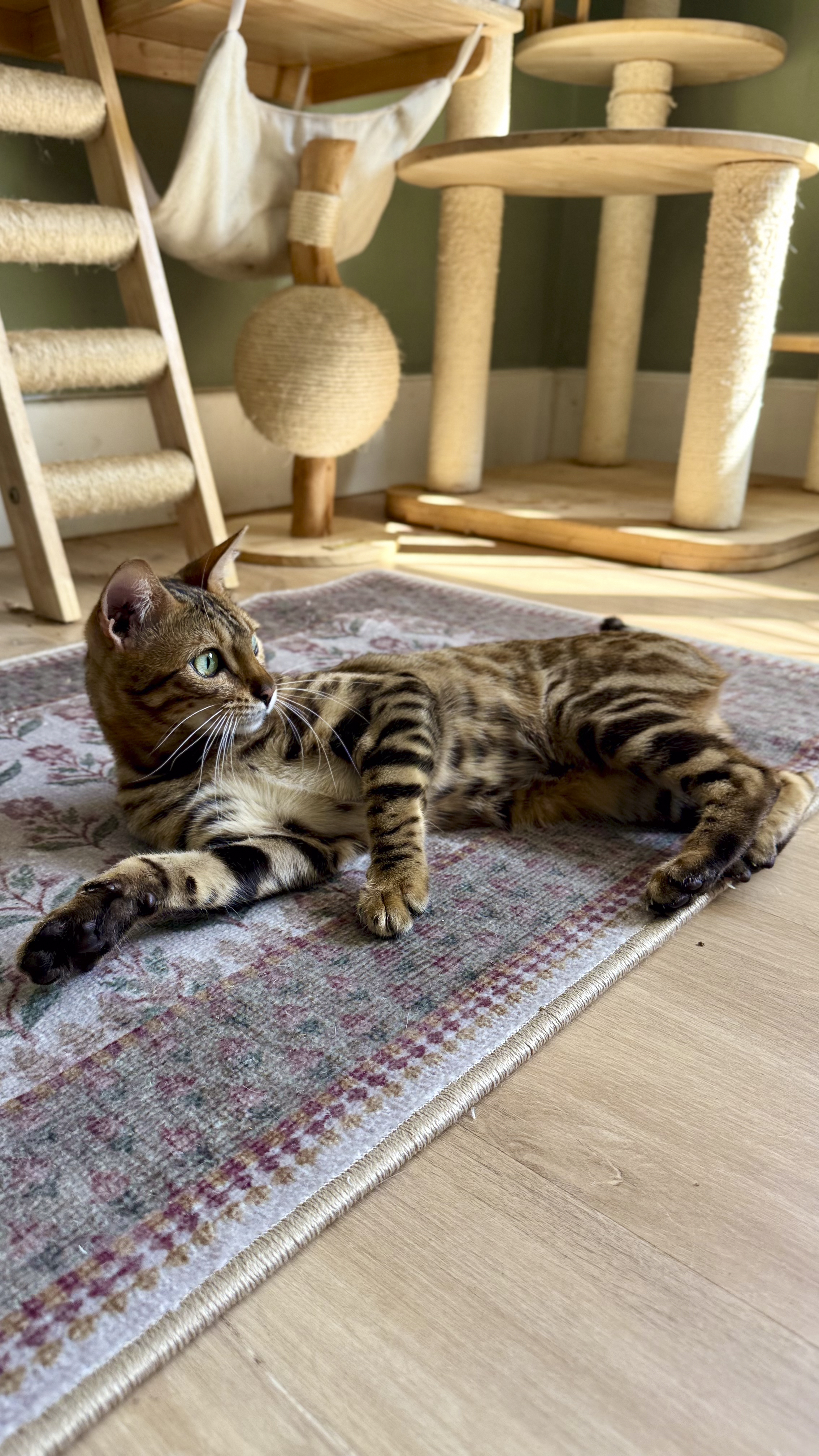
The Bengal
A little leopard with a very big personality.
The Bengal was originally developed using the Asian Leopard Cat, a small wild feline native to Asia. Through subsequent generations of breeding with domestic cats, the modern Bengal x into the domestic companion we know today while retaining many of the physical characteristics responsible for its unmistakably exotic appearance.
The earliest Bengals originated from crosses between the Asian Leopard Cat and domestic cats, with several domestic breeds contributing to the development of the Bengal as we know it today. Egyptian Maus, Abyssinians, Burmese and American Shorthairs, alongside other domestic cats, were incorporated into early breeding programmes to help establish the breed’s distinctive appearance and domestic temperament. Over successive generations, Bengal-to-Bengal breeding developed the established domestic breed we know today.
Their coats are perhaps their most recognisable feature. Bengals can have spotted or marbled patterns, with spotted coats displaying several different forms of rosetting. Some also inherit glitter, causing individual hairs to catch the light and giving the coat its characteristic shimmer.
Bengals encompass a particularly broad range of genetics and appearances, including brown, snow, silver, charcoal, melanistic (solid), dilute (blue) and Cashmere (long-haired). These genetics can produce everything from almost panther-like melanistic coats to pale snow colouring, dramatic charcoal markings and the long, flowing coats of Cashmere Bengals.
But Bengals are far more than their coats.
They are intelligent, athletic, inquisitive and highly interactive cats. Many form strong bonds with their people, follow them around the home, learn tricks, enjoy harness walks and need far more mental and physical stimulation than the stereotypical image of an independent house cat might suggest.
I discovered all of that through Mila, my first Bengal. She opens cupboards, climbs trees, joins me on walks with the huskies and seems endlessly interested in whatever I am doing. She embodies everything I had hoped to find in the breed and ultimately inspired the Bengal side of Born Wild.
And perhaps that is what makes a Bengal so difficult to describe until you’ve lived with one. They don’t simply share your home; they become involved in it. They want to investigate what you’re doing, climb somewhere they probably shouldn’t, learn how things work and make themselves part of everyday life.
Behind that little leopard exterior is an enormous personality and an incredibly engaging companion. Once you’ve experienced life with that much curiosity, intelligence and character following you around the house, x.
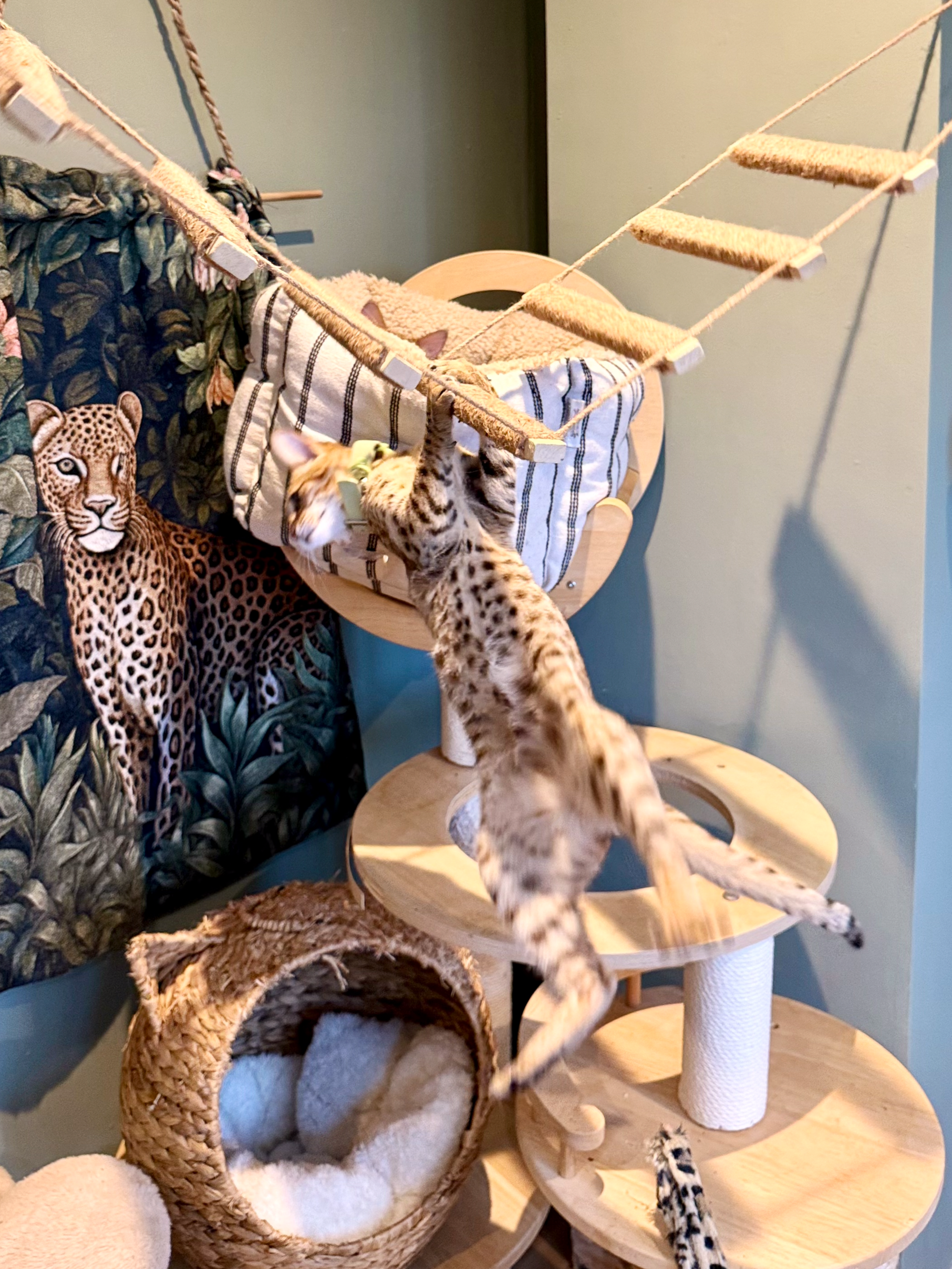
The Savannah
Where elegance meets the wild.
The Siberian Husky has a history stretching back thousands of years to the Chukchi people of north-eastern Siberia, where dogs were developed to travel across vast frozen landscapes. Their endurance, efficient movement and dense double coats made them exceptionally suited to life in an Arctic environment.
That history can still be felt in the breed today.
Siberian Huskies are athletic, intelligent, social and famously independent. They were bred to move, think and work, and tend to approach life with an adventurous curiosity of their own. Their wolf-like appearance may be what first catches someone’s attention, but it is their personality that makes living with one unlike living with almost any other dog.
They thrive with companionship, enrichment, exercise and owners who appreciate that intelligence doesn’t necessarily mean obedience. They can also be challenging. Huskies are renowned for their energy, prey drive, vocal nature and talent for finding weaknesses in supposedly secure boundaries.
It was this breed that began Born Wild with Kaia and ultimately led to our low-content Wolf-Husky programme.
A Wolf-Husky is a hybrid rather than a recognised dog breed, combining domestic dog ancestry with more recent Grey Wolf ancestry. Our focus is specifically on low-content Wolf-Huskies, where the majority of genetic ancestry remains domestic dog.
The foundation of our programme is Wilder, imported from Le Pacte des Loups in France. Embark DNA testing identifies Wilder as 86.4% Siberian Husky and 13.6% Grey Wolf. His woolly agouti coat, solid black mask and icy blue eyes give him an unmistakable presence, but he is also wonderfully goofy, playful and deeply affectionate with the people he trusts.
Wolf-Huskies display similar characteristics to purebred Huskies, and can also exhibit heightened sensitivity, roaming or escape behaviours, high exercise requirements and strong social needs. Every individual is different, however, and the presence or intensity of a particular behaviour cannot be predicted simply from a DNA percentage.
Perhaps what makes these dogs most special is the relationship you build with them. A Husky or Wolf-Husky hybrid isn’t necessarily the dog who believes every stranger is their new best friend. They can be independent, selective and very much their own individual. Their affection often feels chosen rather than automatic, and earning their trust and becoming their person creates an incredibly rewarding bond.
Add in the adventure, conversation, chaos and character that comes with sharing your life with one and it’s easy to understand why, once you’ve been chosen by a Husky, one so often becomes two.
Meet the Founder
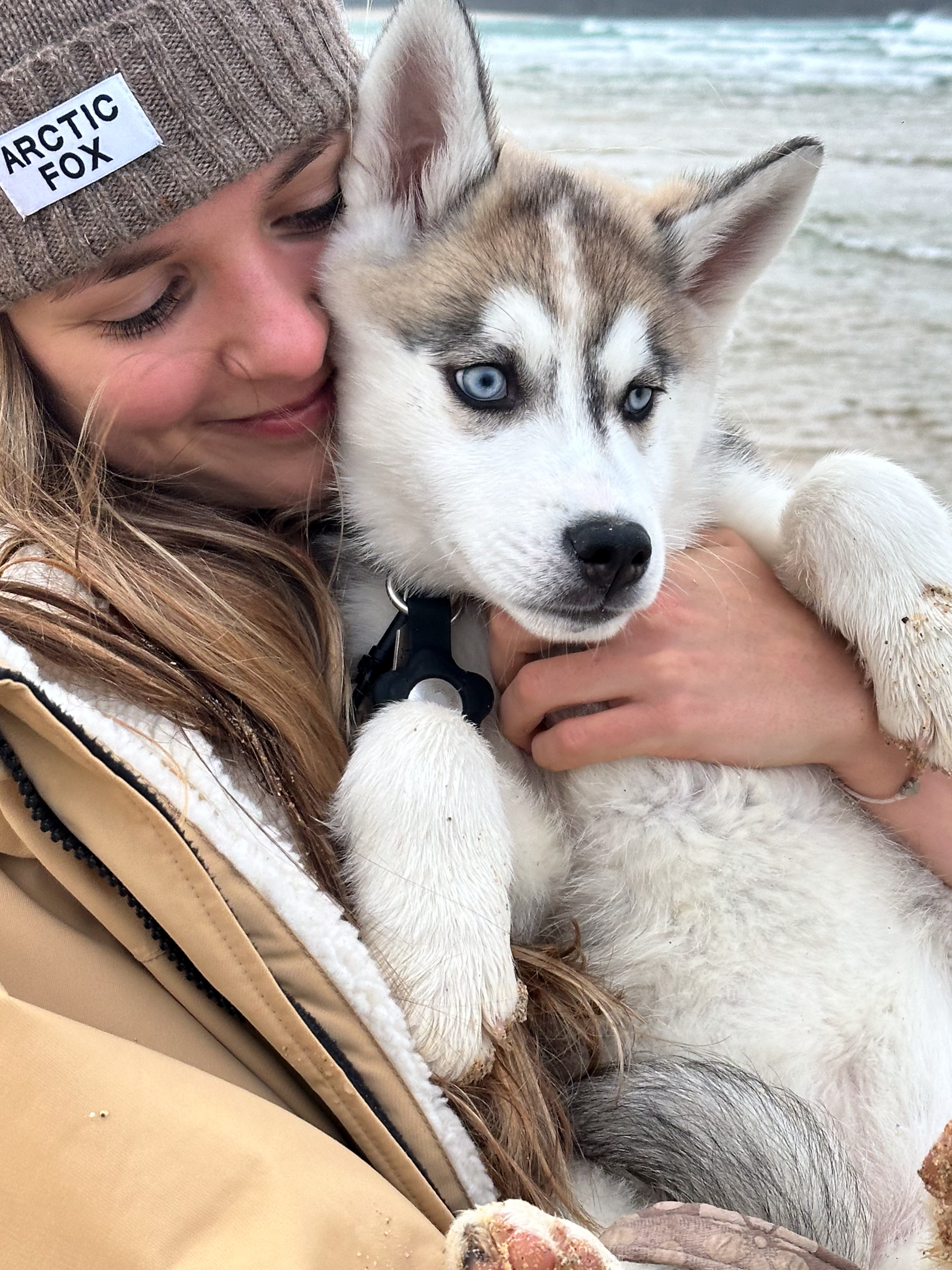
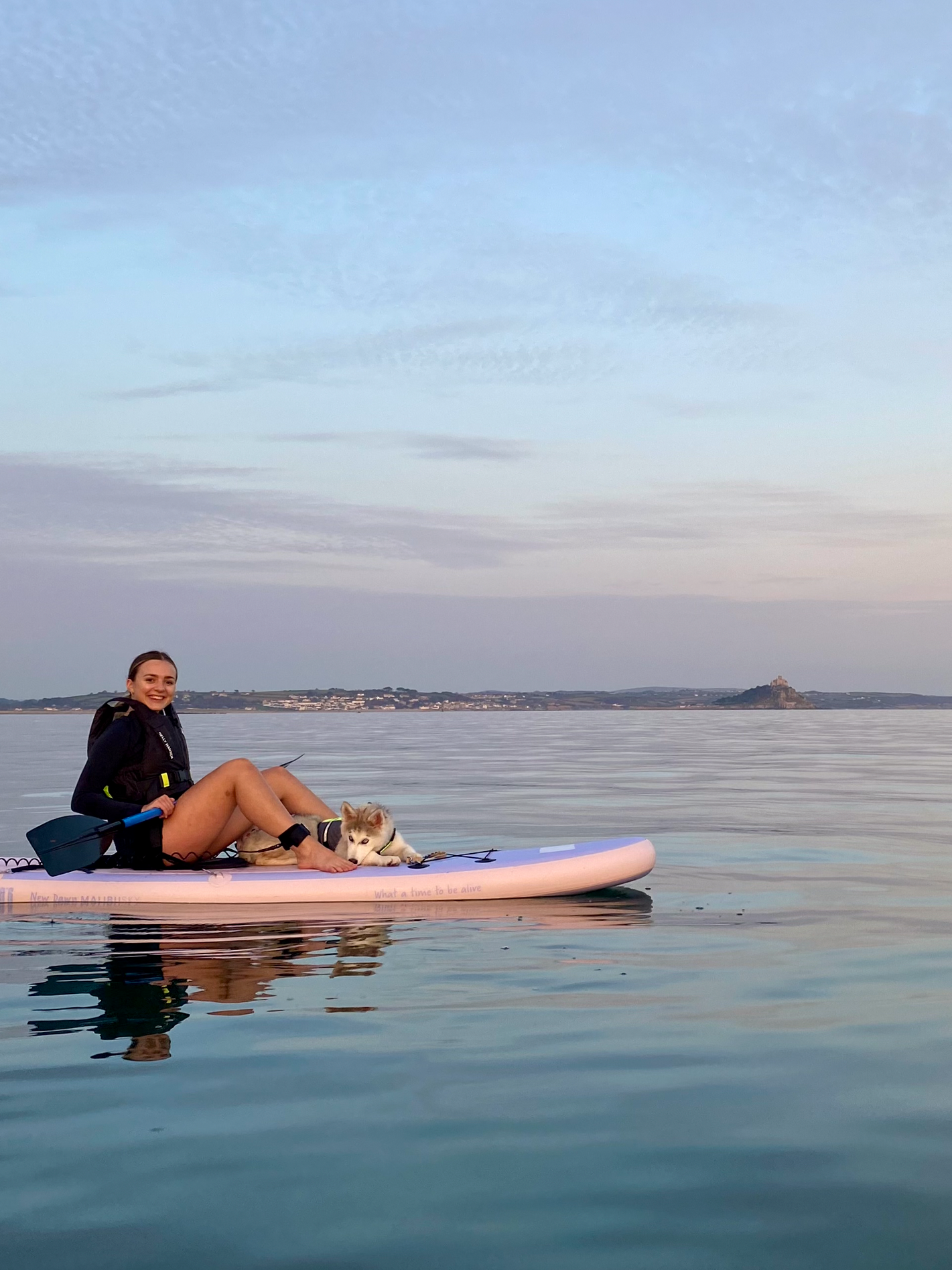
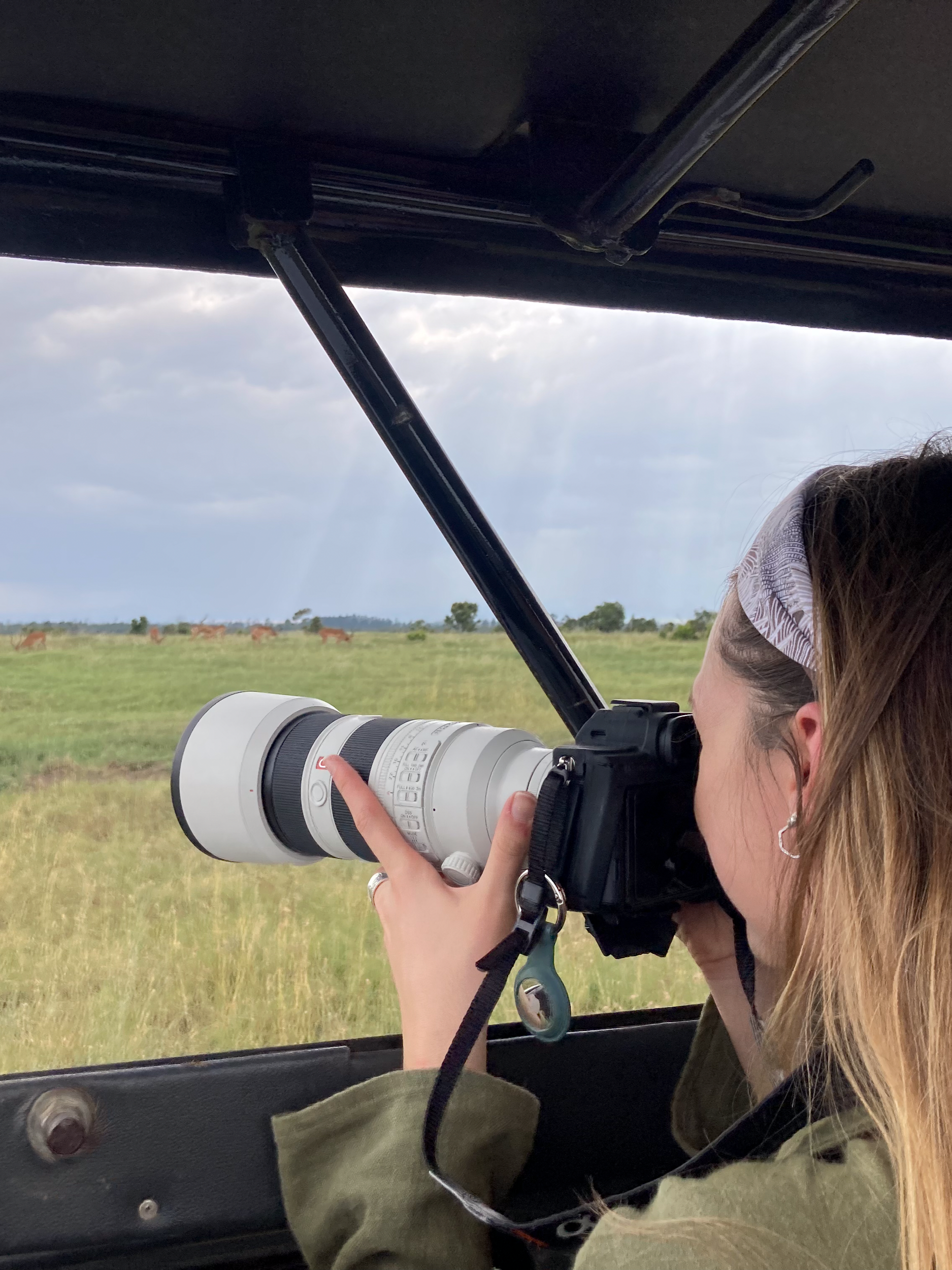
Emma Alice Howard
I was the little girl completely fascinated by animals, wildlife and the world beyond my doorstep. While my friends played with dolls, I was far more likely to be pretending I was on an African safari, searching for animals and exploring imaginary landscapes.
My favourite television programme was ITV Wild at Heart, my favourite computer game DK Become a World Explorer, and I would happily take an encyclopaedia to bed and read about animals and faraway places as a bedtime story.
A huge influence on that curiosity was my Grandad, who I’ve called ‘Dabba’ for as long as I can remember, and who remains one of my biggest role models. Through his career in engineering, he travelled extensively around the world, and I grew up hearing about the countries and places he had visited. He would return from his travels with stuffed animals for me from different corners of the world — a collection I treasured as a child and still have to this day. I wanted to grow up and see the world as he had. Those stories and little animals represented places that felt impossibly far away at the time and fuelled my curiosity about the landscapes, cultures and wildlife beyond home.
That childhood fascination never disappeared. It grew into a love of nature, wildlife, travel and adventure, eventually leading me to pursue a Bachelor’s degree in Animal Behaviour Psychology and later a Master’s in Conservation, before taking me to the Seychelles to undertake field research.
Photography became another huge part of my life along the way. There are few places I am happier than somewhere wild with a camera in my hand, whether travelling across the world in search of wildlife or simply exploring the coast and countryside closer to home.
These days, some of my favourite moments are also the simplest: long coastal walks with the dogs, paddleboarding along the Cornish coast, or packing up the TentBox and heading away camping with the dogs for a few days. They are happiest wherever the next adventure takes us — and so am I.
My love of Siberian Huskies began much earlier, while I was in sixth form. For my Gold Duke of Edinburgh’s Award, I chose to undertake a dog-sledding expedition and completely fell in love with the breed. Their independence, intelligence, endurance and wolf-like appearance fascinated me, and I came home saying that one day I would have a Husky of my own.
And eventually, I did.
Kaia became my first Siberian Husky and, without either of us knowing it, the beginning of everything that followed.
All of these passions have naturally shaped the animals I have been drawn to ever since. There is a common thread running through Born Wild: intelligent, adventurous animals with a tangible connection to the wild.
From Siberian Huskies and the Grey Wolf ancestry within Wolf-Husky lines, to Bengals with their origins in the Asian Leopard Cat and Savannahs descended from the African Serval, each reflects something about the natural world that has fascinated me since childhood.
Looking back, Born Wild feels like the place where all the different threads of my life eventually came together: the little girl dreaming of African safaris and inspired by her Grandad’s adventures around the world; the teenager standing behind a team of Huskies; the animal psychology and conservation student studying the natural world; the traveller seeking out wildlife and wild places; and the photographer happiest outdoors with her animals and a camera in hand.
Born Wild isn’t simply a name — it is a reflection of the life I have always been drawn to.
FAQs
Where is Born Wild based?
Born Wild is based in Cornwall, UK, where our dogs and cats are raised as part of our home and family, surrounded by the coast and countryside. We welcome families from across the UK and are happy to travel to meet part-way or personally deliver your puppy or kitten where appropriate, with any additional travel arrangements and costs agreed in advance.
What breeds do you specialise in?
We specialise in Siberian Huskies, low-content Wolf-Husky hybrids, Bengals and Savannah cats, with a focus on health, temperament, genetics and responsible breeding.
How are your breeding animals health tested?
Our breeding animals undergo comprehensive DNA and genetic health testing through Embark and Wisdom Panel. These reports provide insight into breed ancestry, genetic diversity, traits and inherited health conditions, helping us make informed decisions when planning future pairings. Health, temperament, genetics and compatibility are carefully considered, and relevant parental health results are available to prospective owners.
How are your puppies and kittens raised?
Our puppies and kittens are raised with a strong focus on socialisation, enrichment and positive early experiences. From a young age, they are introduced to everyday household sights and sounds, regular handling, other cats and dogs, and a variety of age-appropriate experiences to help them develop into confident, well-adjusted companions.
They are raised on a complete raw diet supplemented with age-specific puppy or kitten food, and introduced to supervised outdoor time, early harness and lead training, and positive car and travel experiences. We aim to give every puppy and kitten a varied and enriching start to life, helping prepare them for the transition into their new homes.
How do I reserve a Born Wild puppy or kitten?
The first step is completing our Enquiry Form, which allows us to learn more about you, your lifestyle and the home you can offer. Reservations usually open once litters reach four weeks of age and are secured with a signed contract and £500 reservation deposit.
Can I join a waiting list for a future litter?
Yes. Our Planned Pairings page provides details of future litters, and you can register your interest in a particular pairing. Preferences such as sex, colour and coat can be considered, although temperament and suitability for your home are equally important.
What will my puppy or kitten come with?
Every Born Wild puppy or kitten leaves with their individual veterinary and microchip records, appropriate registration or ancestry documentation, and relevant parental DNA and genetic health reports.
To help make the transition into their new home, each puppy or kitten receives a care pack, including their current food, familiar litter for kittens, a blanket carrying the scent of their mum and siblings, toys and other useful items to help them settle in.
We also provide their next flea and worming treatments for when they are due, along with 4 weeks’ Petplan insurance for eligible puppies and kittens within the UK. Each new owner also receives a Born Wild breed-specific information and care guide, covering settling in, feeding, training, enrichment, health and ongoing care.
Are puppies and kittens available with breeding rights?
The majority of our puppies and kittens are placed as companions and must not be bred from. Selected animals may occasionally be available to approved, registered and health-tested breeding programmes. Breeding rights must always be agreed with us in advance and are subject to a separate contract.
Do you offer lifelong support?
Yes. Our relationship with our families doesn't end when their puppy or kitten leaves Born Wild. We offer lifelong support and guidance and love staying in touch, following their adventures and watching the animals we've raised become part of their new families.
Join our Community

Contact Us
Interested in joining our wait list, or finding out more about our upcoming litters?
Please fill out your details and we will be in touch shortly.