
The Born Wild Bengal Guide
ABOUT THE BENGAL
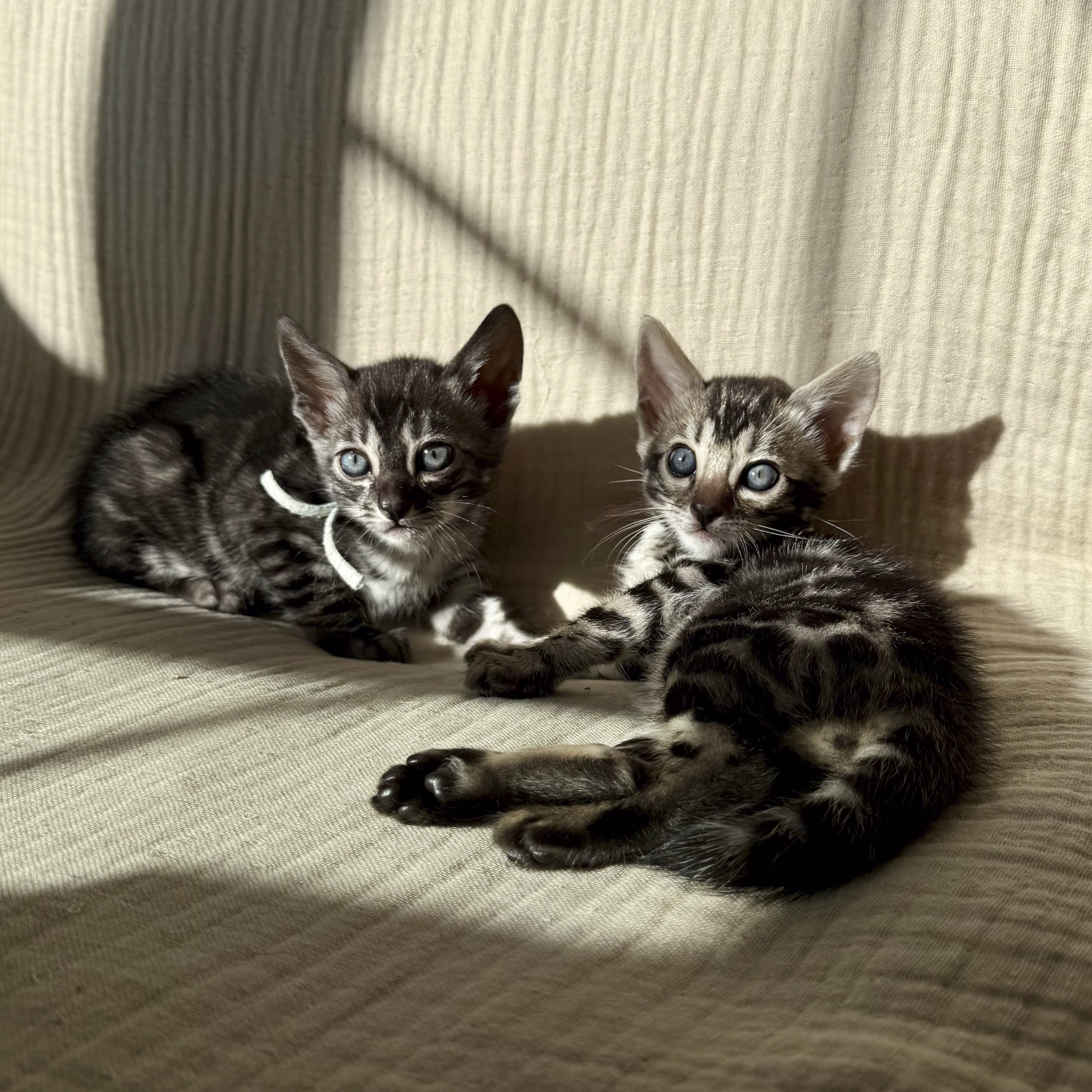
The Bengal is a truly distinctive breed, originally developed from the Asian Leopard Cat. This heritage gives Bengals their striking, exotic appearance while maintaining the affectionate and loyal temperament of a domestic companion. Famed for their rosetted coats, glittering fur, and athletic build, Bengals are as breathtaking as they are intelligent. They are highly curious, playful, and thrive in homes that provide mental stimulation, interactive play, and opportunities for exploration. Bengals form strong bonds with their families and often display dog-like traits — following their humans from room to room, enjoying walks on a harness, and learning tricks. With the right environment, they are not only visually stunning but also deeply engaging companions.
BENGAL COLOURS & PATTERNS
Bengal coats can be spotted (with donut, arrowhead, paw print, or clouded rosettes) or marbled (with sweeping, flowing patterns). Every Bengal is unique, and will never share the same markings.
Brown (A/A or A/a): Ground colour ranges from golden through rufous to rich brown. Markings: dark brown to jet black, with a black tail tip. Eye colour: green or gold. The most traditional Bengal colour.
Snow (cs, cb genes): Results from combinations of the albino genes (cs; Siamese/lynx & cb; Burmese/sepia). Three types: Seal Lynx (cs/cs) → cream-white coat, faint markings, always blue eyes. Seal Mink (cs/cb) → ivory to light tan coat, darker mink markings, aqua/blue-green eyes. Seal Sepia (cb/cb) → warmer ivory-to-tan coat, darker sepia markings, green or gold eyes.
Silver (I/I or I/i): Controlled by the inhibitor gene (I) which reduces warm tones. Base coat: white to dark steel with grey/black markings. Tail: black tip. Eyes: green or gold.
Blue (Dilute - d/d): Requires two copies of the dilute gene (d). Ground colour: pale slate to soft blue-grey. Markings: medium to darker blue. Tail: dark grey tip. Eyes: green, gold, or hazel.
Melanistic (Solid - a/a): Arises from two copies of the non-agouti gene (a). Coat: solid black (brown), snow, smoke (silver), or blue, though ghost rosettes may show in direct light. No warm tones. Eyes: green, gold, or hazel. Panther-like look.
Charcoal (Apb/a): A coat pattern modifier caused by a combination of the Asian Leopard Cat agouti gene (Apb) and the non-agouti gene (a). Distinguished by a darker 'mask' and cape-like shading with white goggles. Seen in combination with brown, snow, silver or blue.
Glitter (gl/gl): Created by two copies of the glitter gene (gl). This unique trait gives the coat a radiant, shimmering effect, making each hair sparkle in the light. The glitter gene is exclusive to Bengals and is highly prized by enthusiasts.
Cashmere (l/l): Produced by two copies of the longhair gene (l). Cashmeres display the same rosetted or marbled patterns as shorthaired Bengals, but with a long, flowing, silky coat.
Cashmeres are rare and striking, combining the wild look of the Bengal with a luxurious coat texture.
HEALTH & GROOMING
At Born Wild, health and welfare come first.
All of our breeding cats are DNA-tested through Wisdom Panel to ensure genetic health, and are confirmed PRA-b and PK-def negative.
All kittens are vet checked, vaccinated, microchipped, and treated for fleas and worms according to veterinary recommendations before leaving for their new homes.
A consistent grooming routine helps keep your Bengal in peak condition:
Brush 2–3 times weekly to maintain coat shine and reduce shedding.
Provide scratching posts and/or nail file boxes to support nail health; trim nails as needed.
Clean ears monthly with a gentle cat-safe ear cleaner.
Brush teeth daily–weekly with a silicone toothbrush and cat-safe toothpaste to prevent dental disease.
Bathe occasionally if needed.
BORN WILD TIP: Begin grooming early so your kitten becomes accustomed to being handled, making future care stress-free.
DIET & NUTRITION
Bengals thrive on a COMPLETE raw diet, which closely mimics their natural nutritional needs. At Born Wild, all of our breeding cats are fed raw, and we raise kittens on the same.
We recommend trusted raw brands such as Barkin Bistro or Bella & Duke, which provide balanced, species-appropriate nutrition.
From 4 weeks old, we also introduce Applaws kitten food, which is specially formulated for kittens and helps provide variety while ensuring optimal growth.
For treats, we recommend Carnilove (natural, grain-free) and Applaws Lickables, which kittens absolutely love and are useful for bonding or rewarding during training.
Feeding equipment also matters:
Stainless steel shallow dishes are best for hygiene and prevent whisker fatigue.
Lick mats and slow feeders help to slow down eating, preventing bloat and digestion issues often caused by fast consumption.
Stainless steel water fountain – encourages hydration and supports urinary health, as moving water is more appealing to cats.
BORN WILD TIP: Avoid kibble entirely. It is high in carbohydrates, low in moisture, and can contribute to obesity, diabetes, and urinary tract issues.
LITTER & HYGEINE
We use wood-based, non-clumping litter, which is low-tracking, non-toxic, and safe if accidentally ingested. It is also environmentally friendly and easy to dispose of.
Our kittens are trained with stainless steel hooded litter trays – these are hygienic, resistant to odours, easy to clean, and provide privacy while your cat does their business.
For multi-cat households, the general rule of thumb is:
NO. OF LITTER BOXES = NO. OF CATS + 1
This ensures that every cat always has a clean and accessible tray, reducing stress and preventing accidents.
If you prefer a low-maintenance solution, we highly recommend the Litter-Robot or Petlibro Self-Cleaning Litter Box. One Litter-Robot can effectively replace approximately five regular litter boxes, making it particularly suitable for households with multiple cats.
We recommend avoiding clumping clay litter as it produces dust that can irritate lungs and poses a risk if ingested.
BORN WILD TIP: Remove the flap/door on hooded trays – some cats can be put off from entering the litter box.
ENRICHMENT & EXERCISE
Bengals are one of the most energetic and intelligent cat breeds. They require plenty of opportunities for mental and physical stimulation:
Sturdy cat tree and wall-mounted climbing apparatus – essential for climbing, scratching, and satisfying their natural need to be up high.
A cat wheel – vital for channelling the Bengal’s high energy levels in a safe and controlled way.
H-shaped harness and lead – protects the delicate neck nerves while allowing safe outdoor walking.
Cat rucksack – enables safe exploration and adventure while keeping your Bengal secure.
Cat tracker (GPS collar) – highly recommended for supervised garden access or outdoor walks to ensure safety.
Puzzle feeders and toys (e.g. Catit Treat Mouse) – provide daily mental enrichment and encourage natural problem-solving.
Catnip toys, teasers, kickers, and chirping bird toys – awaken hunting instincts and keep play interactive and exciting.
BORNWILD TIP: Rotate toys weekly to maintain novelty, prevent boredom, and keep your Bengal engaged.
SETTLING IN GUIDE
Bringing your Bengal kitten home is exciting, but the transition can also feel overwhelming for them. The first days and weeks are critical for building trust and helping your kitten adjust.
First 24 Hours: Set up a quiet, secure room with food, water, litter, bedding, and a few toys. This becomes their safe space while they adjust to new surroundings.
Familiar Comforts: Provide blankets or items with the scent of mum and siblings. This familiar smell helps reduce stress and provides reassurance.
Slow Introductions: Allow your kitten to settle for at least 14 days before introducing them to other pets. Start with scent swapping (bedding, blankets, toys) and progress to short, supervised meetings.
Consistency is Key: Keep the same diet and litter type for a minimum of 4 weeks. Too much change at once can upset their stomach and increase stress.
Gentle Exploration: Gradually expand their access around the home once they appear confident in their safe room. Always supervise during the early stages.
Routine & Stability: Feed, play, and clean on a regular schedule to help your kitten feel secure.
BORN WILD TIP: The first week is all about patience. Sit quietly in their safe space, let your kitten come to you, and build trust at their pace.
KITTEN CHECKLIST & ESSENTIALS
• Cat cave & wicker basket bed for comfort
• Sturdy cat tree & wall hung cat apparatus
https://www.lordsandlabradors.co.uk/collections/cat-scratch-posts
• Cat wheel
• Stainless steel shallow dishes, lick mats, slow feeders & feeding mat
• Stainless steel water fountain
• Wood-based, non-clumping litter & stainless steel hooded trays
• Litter robots
https://www.amazon.co.uk/Litter-Robot-Step-Fence-Whisker-Black/dp/B0CFTCG4B8
https://www.amazon.co.uk/PETLIBRO-Self-Cleaning-Cat-Litter-Box/dp/B0FPX3GGN7
Toy suggestions (including cat tunnel, puzzles, treat mice)
• H-shaped harnesses & leads
https://cocopuplondon.com/collections/cococat
• Cat rucksack
• Cat tracker
• Cat-safe cleaning products
• Cat-safe grooming products (including brush, nail file box, ear cleaner, toothpaste, shampoo)
https://www.amazon.com/Fig-Friends-Scratch-Puzzle-Enrichment/dp/B0DPLK9N2H
• Barkin Bistro complete raw food, Applaws kitten tins, Applaws lickables & Carnilove treats
BARKIN BISTRO REFERRAL CODE FOR £10 off 1st box: https://barkinbistro.co.uk?ref=nigel.waller
https://amzn.to/42Pq5YO / https://amzn.to/3Ks8hNb
• Secure carrier for safe transport (required by law)
• Wisdom panel test kit (if interested in trait genetics)
